
Why Offer Trainings?
Share Knowledge & Build Community
We are passionate about creating change. We find that our work resonates with what many people know to be true — we all deserve dignity. We are eager to share what we’ve learned along the way to support the leadership of BIPOC youths in other communities, as well as the adults who want to do right by them.
Audience
We provide trainings for educators, social workers, public health workers, graduate and undergraduate students, as well as for our fellow youth. We love an intergenerational space!
Facilitators
All of our trainings are facilitated by Pa’lante Peer Leaders (ages 13-19), and are accompanied by at least one staff facilitator.
Timing
All training topics are designed for either 90 minutes or half-day trainings. We can tailor the training to your organization’s needs.
Book a Training
Please reach out to Training Manager, Katelynn Cruz.
Building Youth Power through YPAR
Have you ever noticed an issue in your community that you would like to change? Learn about how Pa’lante youth have used this organizing model to advocate for change in our schools and communities, and build skills that you can use to better your own community.
Origins of Pa’lante
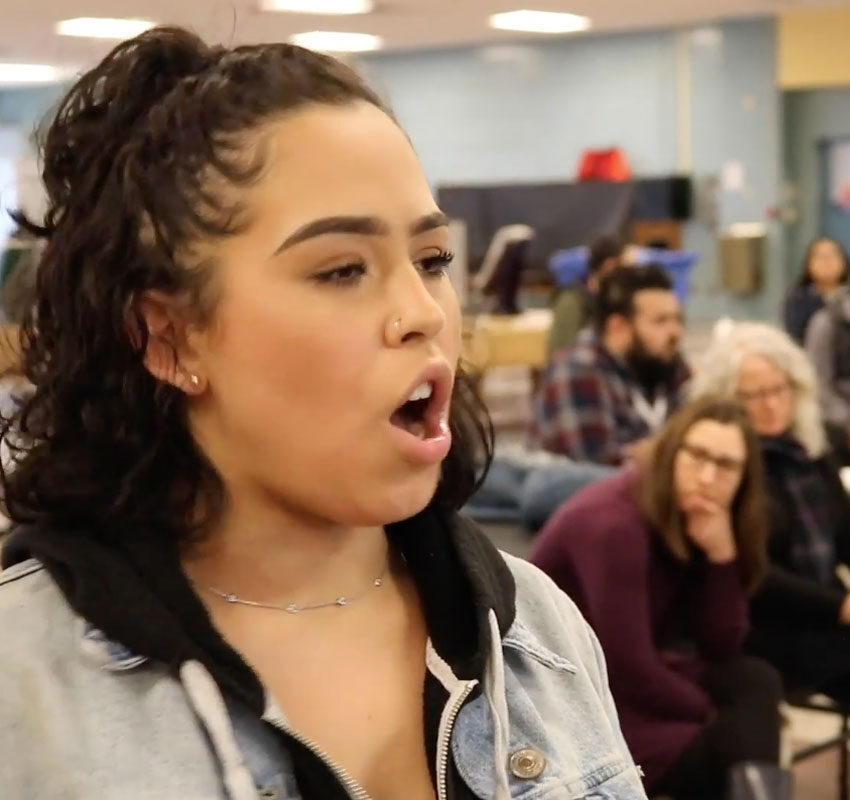
How did we create pockets of liberation within a school system? How are we organizing in our city and across the state now? Join us to learn more about how Pa’lante came to be, how we have transitioned from a school-based to community based organization, while staying rooted in the values that carry us forward. This workshop will be a blend of information and interactive activities that will help you to fight for change in your own community.
Resisting Statistics
Our Fight Against the School-to-Prison Pipeline
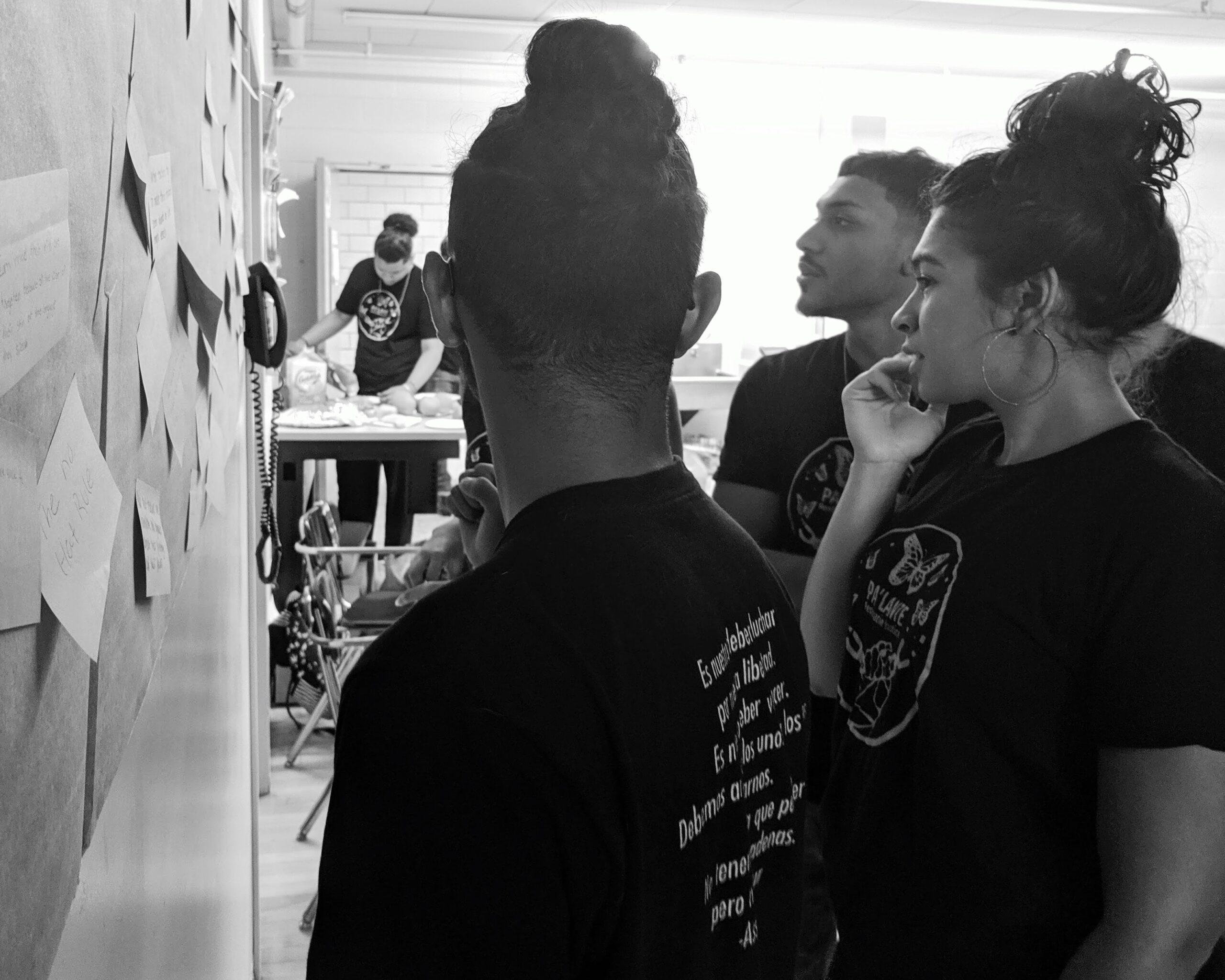
Did you know that Black students are 4x more likely to be suspended than their white peers? And, that every suspension increases a student’s likelihood to become involved in the criminal (in)justice system? Join us to learn about the phenomenon called the School-to-Prison Pipeline and how you can fight for change.
Intro to Restorative & Transformative Justice
Join us to learn about the differences between Punitive, Restorative, and Transformative justice, and learn about how we can use RJ and TJ practices to build a better world while creating alternatives that can replace the punitive systems that are in place.

Training Costs
We love sharing our work! Because offering trainings takes time away from our day to day work, we prioritize gigs that bring financial resources back to the program. In fact, our trainings now make up about 5% of our annual budget, and we are hoping to increase this over time. Occasionally, we are able to work with folks who can’t pay full price, especially local grassroots organizations, so please reach out if you want to discuss. Travel over 30 minutes is an extra fee.
Our typical rates:
| Timeframe | Training Team | Participants | Cost |
|---|---|---|---|
| 1-1.5 hr presentation | One staff member and 1-4 student leaders | Up to 100 | $750-$1500 |
| 1.5-3 hr presentation and circle experience | One staff member and 3-6 student leaders | Up to 30 | $1500-2500 |
| 6-7 hr full day workshop | One staff and 3-6 student leaders | Up to 30 | $3000-$5000 |
| Phone consultation | One senior staff member | N/A | $150-$200/hr; limited capacity |
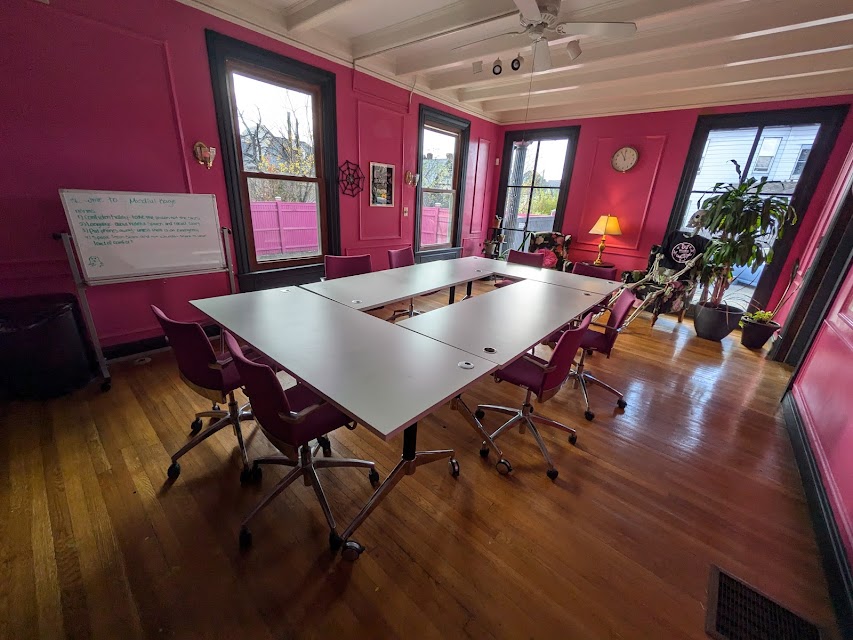
Host your training here
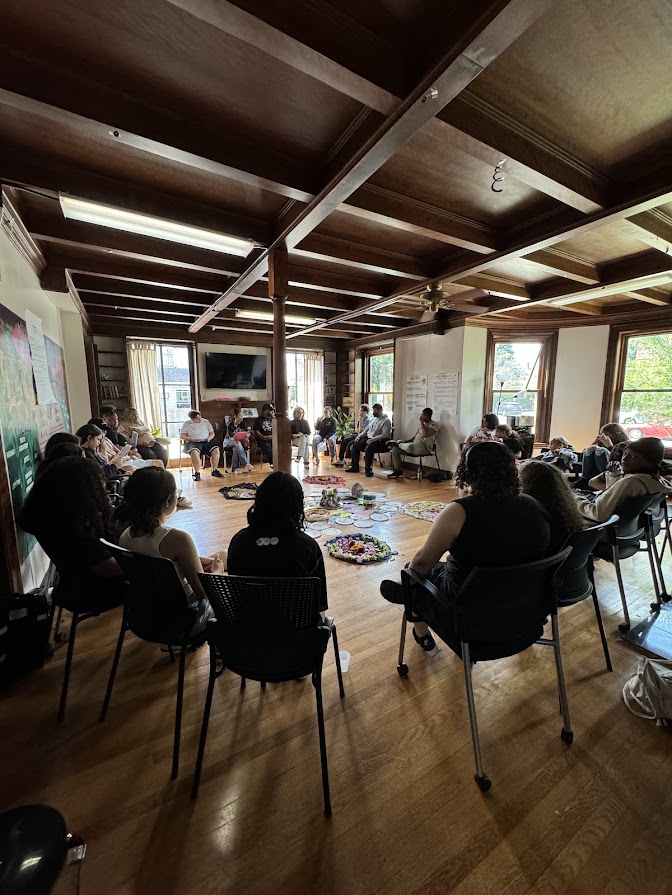
We have a beautiful space here at 220 Linden Street in Holyoke and can host groups of up to 30 people comfortably in our space.
Guidebook
We also wrote a guidebook reflecting on our first 9 years of practicing restorative and transformative justice. Equal parts reflection and practical tools, we hope it helps you seed (or water) efforts in your own community!
Training Videos
We are thrilled to be able to offer four training videos giving you in-depth insight into how we do our work, thanks to generous funding from the Nellie Mae Education Foundation.