
In 2017-18, we decided to really focus on race and racism at our school. This is always an important part of our work, but we were especially motivated after seeing the backlash that happened after one of our peer leaders read a poem about colonization and white supremacy at our Latinx Heritage Assembly. We thought that it illuminated some of the divisions and challenges in our school and we wanted to better understand the issues so we could help transform them.
The overarching questions we wanted to explore were 1. How does racism operate at Holyoke High School (HHS)? And How are different racial identities represented or not represented at Holyoke High School?
To understand what students at HHS were experiencing in regards to racism we used a mixed methods approach. This means we used more than one tactic to gather information.
- We developed a survey that was given to HHS students in advisory. Over 200 students took the survey.
- We interviewed students about their experiences.
- We used photography to capture the ways different racial and ethnic groups were and were not represented at HHS.
Finding 1: Visuals in the building are mostly of white people and mostly males
In our review of visuals throughout the school, we found that 69% of the images of people represented in hallways on murals, posters and displays were white and 65% of them were male. The graph on the left shows the demographics from the school visuals. On the right, you see our school is almost 80% comprised of people of color. So notice that basically the numbers are flipped. People of color make up 80% of the school, but only 31% of the visuals.
- 31% POC
- 69% White
School Visuals
- 80% POC
- 20% White
Student Population
On the first floor of Holyoke High, there is the “Holyoke High School Hall of Fame”, which is a bunch of framed photos of people who are considered “successful HHS graduates”. We took a video so you could see all of the people who are included in the Hall of Fame. As you can see, it features almost all white men with just a couple white women and one black man. From what we could tell, there are no Latinx people. If this is supposed to represent successful graduates, what does the absence of people of color and women communicate to students?
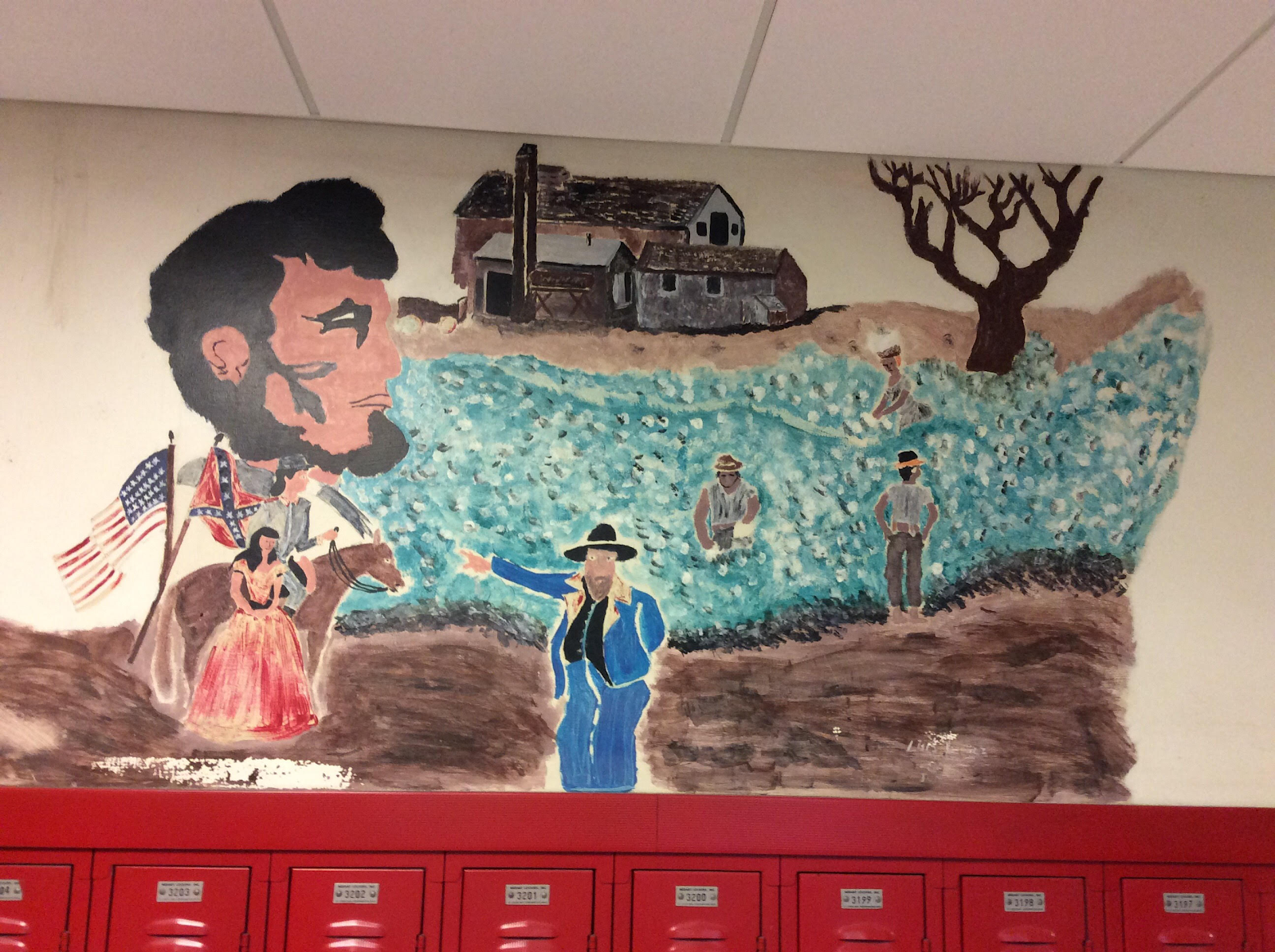
We noticed that the pictures of people of color included many that involved people of color in subjugated positions, such as in slavery or internment camps. This mural is one example. While this is an important piece of history, we noticed there weren’t as many examples of people of color in positions of power reflected around our school.
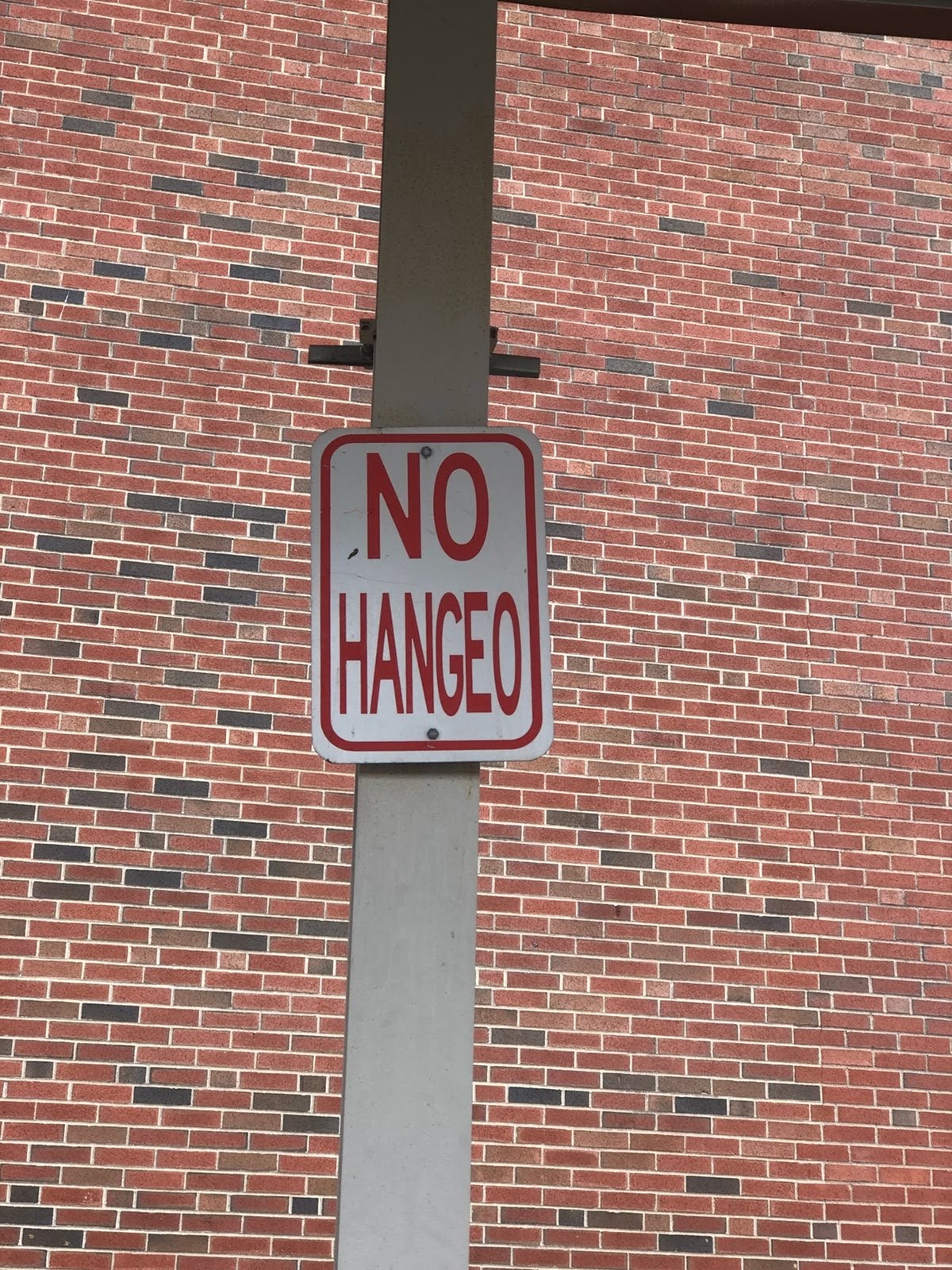
This sign is another example of a visual, this time near the front entrance of our building. “No hangeo” is not proper Spanish, but rather slang for “No Loitering”. Interestingly, there is no equivalent sign posted in English. It looks like the school specifically does not want Spanish speakers to hang out outside of the building, but it does not apply to English speakers.
This relates both to our previous finding about visuals in and around the school, and also to our next finding, about the experience and treatment of Spanish Speakers at our school.
Finding 2: Spanish speaking students are targeted based on language practices
Our second finding is that students are being told not to speak Spanish by their teachers, which honestly we already knew from our own experiences, but our survey results confirmed this.
In our survey, we found that that 11% of HHS students have been told not to speak their native language at HHS. This slide provides a visuals of the one in ten students at HHS who have had this experience. We actually wonder if the number may be higher, since unfortunately, we did not survey a representative number of ELL students in our survey and they are probably hte most likely to speak Spanish during class
Maybe even more disturbing, 39% of students of color reported that they have heard other students being told by a teacher not to speak their language. That’s almost 4 in 10 students who have heard something like that. Keep in mind that these kinds of comments have a real impact on both students directly targeted by these comment as well as those who over hear it about what and who is valued at our school.
Finding 3: Students of color are underrepresented in leadership roles, clubs and high level classes.
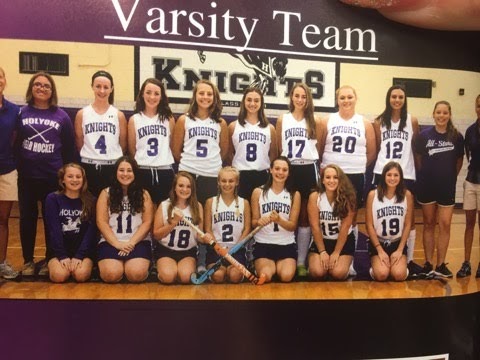
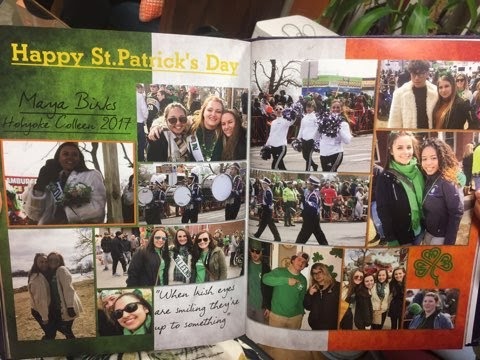
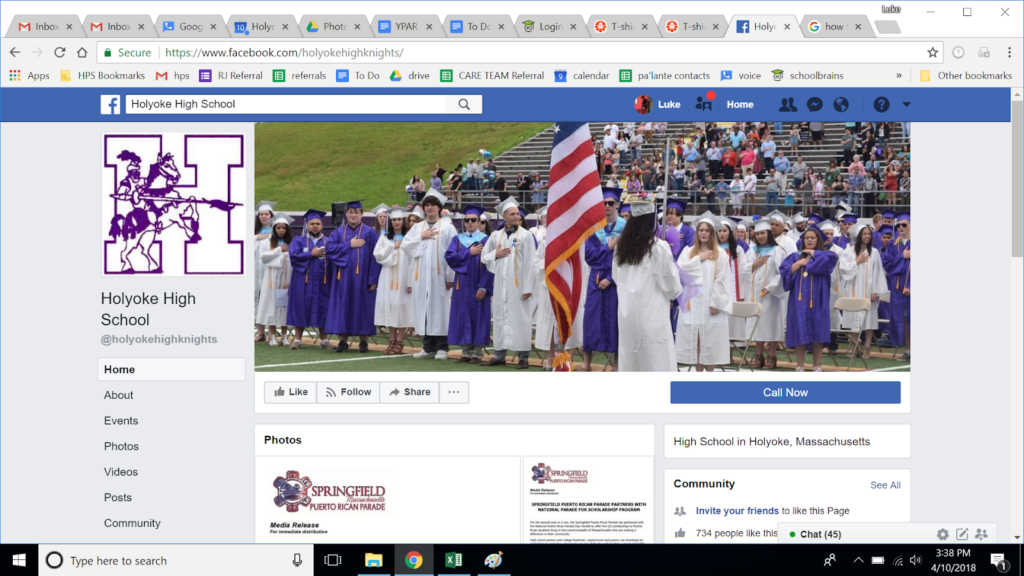
Through taking pictures, looking through the yearbook, analyzing Holyoke High School official social media, and through interviews and our survey we found that students of color are underrepresented in leadership roles, clubs, and high level classes.
From our survey we found that about 70% of all students felt that the school encourages students to take challenging classes no matter what their race, ethnicity, nationality, and or cultural background, which is awesome! However, students of color were nearly twice as likely than their white peers to feel that they were not encouraged to take challenging classes (In case anyone asks, it was 6% white students, 10% students of color).
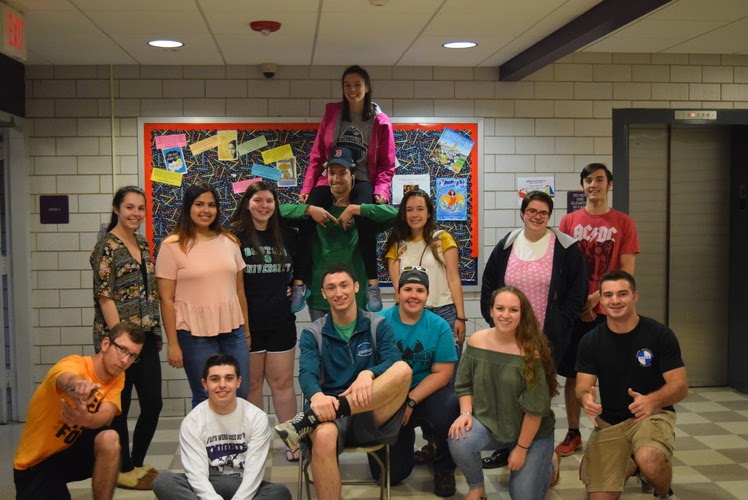
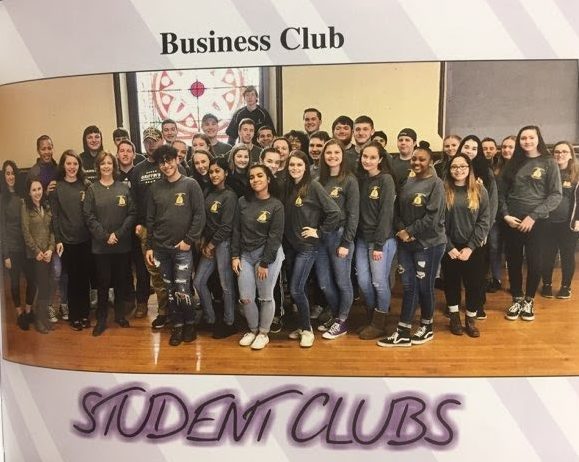
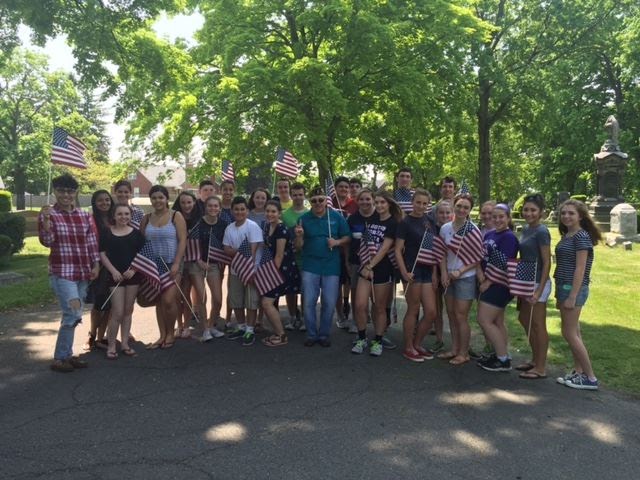
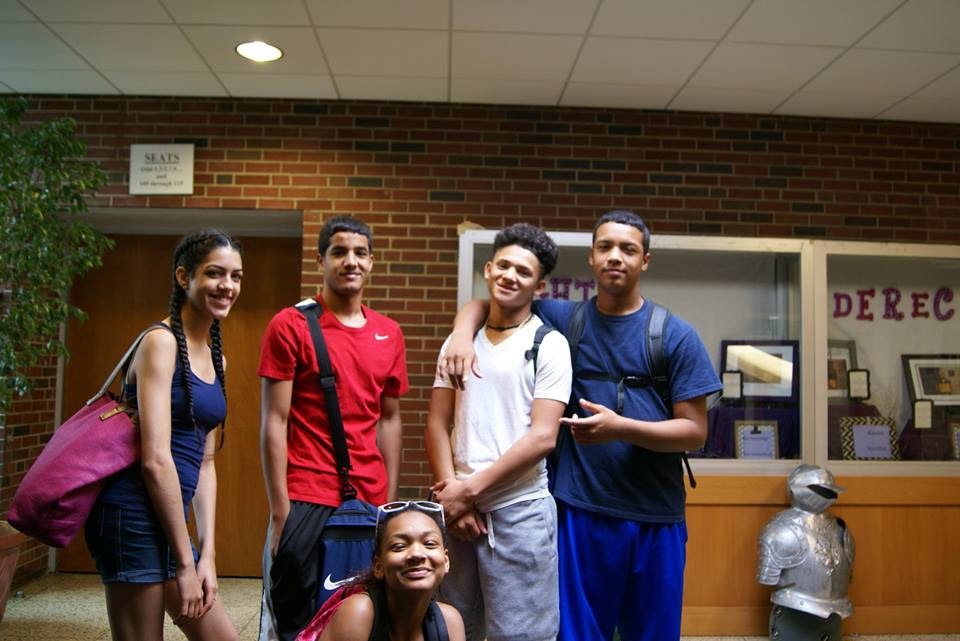
We also looked at yearbook photos, the Holyoke High Herald website, and the school’s facebook page to see who is involved in sports and clubs at our school and who is represented in official school publications. Our research showed us that White students are more involved in extracurricular activities than students of color. We will show you some photos from our research.
Finding 4: Overall, students do not learn about race, racism or people of color in their classes
Students report the main thing they do learn about people of color is slavery, Martin Luther King Jr. They noted that in their classes, racism is viewed as a historical thing not a current reality.
Here is a clip of one student we interviewed talking about the importance of learning about racism. Another person we interviewed had some similar words to share.
This graphic is just looking at students of color who took our survey when they were asked whether they learn about their history or culture in their classes. If you add up the students of color who said they learned about their history or culture in either none or few of their classes, it makes up 85% of students of color reported that they learned about their history and culture in few or none of their classes.
I learn about my history/culture in _______ of my classes.
There were definitely some exceptions of students who said they did learn about their culture and history of people of color. Many of these mentioned that they had the opportunity to take ethnic studies. Also, many of those that said they learned about people of color at HHS in the interviews and surveys cited the Latinx Heritage Assembly as the primary example.
- 3% All
- 11% Most
- 62% Few
- 24% None
Recommendations
Recommendation 1: Expand Ethnic Studies
Our first recommendation is to expand our ethnic studies program. We believe that learning about women and people of color should be an essential part of every holyoke highs school student’s experience. To make this a reality, we recommend that existing ethnic studies programs in the middle and high schools should continue to be sustained and supported. We also recommend creating a graduation requirement for ethnic studies.
For the short term, All 9th grade English and Social studies classes should be ethnic studies focused. This will already be happening at the south campus. On the north campus, one third of incoming ninth graders have opted to continue taking ethnic studies. For the medium term, all teachers should be given ongoing, mandatory training in culturally sustaining pedagogy. For the long term, we envision a school where ethnic studies is infused into every classroom and every subject, and that ethnic studies competency is included in teacher evaluation.
Recommendation 2: Build Teacher/Student Relationships
Our second recommendation is to build stronger teacher/student relationships. To do this, we recommend creating and funding monthly facilitated dialogue with students and teachers around race, led by outside facilitators who are experienced in working with schools around issues of racism and adultism. Also, we see a need for an Intentional recruitment plan to increase the number of teachers of color at Holyoke High School.
Recommendation 3: Actively Promote Bilingualism
Next, we recommend “Actively promoting bilingualism”. We need to develop a clearly articulated school policy asserting students’ right to speak their native language and make sure all students and teachers are trained in this policy. That means no more telling students that they can’t speak spanish!
Recommendation 4: Place visuals in public spaces that accurately reflect the student body.
These visuals should feature women and POC and accomplishments around the school and encourage and provide resources to each department to generate visuals reflective of the student body. Specifically, we also request adding to the wall of distinguished HHS graduates to include a proportionate number of women and people of color!
We thought we would show you a couple positive examples of visuals that we really liked and that we’d like to see more of. This one is from the 9th grade academy and it has lots of photos of students and talks about their positive accomplishments. We love it.
Recommendation 5: Take measures so that clubs, sports, and activities reflect student demographics
To do this, we recommend that there is more intentional and specific outreach to encourage students of color, so that they can know about these opportunities. We also recommend that more research be done to identify what the barriers are to fair representation of students of color in extracurriculars, and what other schools are doing to address this.
Recommendation 6: Create forums/systems for listening to student experiences
Holyoke High needs to Institute an ongoing process to understand student experiences at HHS, paying particular attention to issues related to race, gender identity, sexual orientation and other aspects of identity. This process should include: A school wide culture and climate survey, including questions that specifically speak to these issues; and the creation and funding of youth voice forums at least twice a year, in which students can speak about the issues that are impacting them.